
The role of the OPP in the First Nations and Inuit Policing Program is to administer the Ontario First Nations Policing Agreement (OFNPA) on behalf of the First Nations that do not have their own administrator. Under the OFNPA, the OPP administers policing services in 17 First Nations.
The Aircraft Enforcement Program couples state-of-the-art technology with the principles of the Provincial Traffic Safety Program to save lives. The OPP uses a Cessna 206 to support traffic enforcement on highways, supporting regional and detachment traffic initiatives. The Aircraft Enforcement Program was conducted in Central Region, East Region and West Region in 2025 to enhance road safety. These initiatives targeted aggressive motorcycle infractions, speeding, commercial motor vehicles following too closely, and stunt driving.
The Auxiliary Program is a volunteer program focused on community engagement and crime prevention, supporting a community-centred objective while providing meaningful exposure to policing. Auxiliary members assist frontline officers by enhancing operational capacity, allowing officers to focus on priority enforcement and response duties while strengthening relationships within the community.
Aviation Services provides air support to frontline OPP members, municipal services and Ontario Public Service employees in an emergent and non-emergent capacity. Duties include, but are not limited to, transportation of personnel and detainees, traffic interception and search and rescue operations.
The Awards and Recognition Unit is responsible for the delivery of programs that recognize and encourage the exemplary behaviour and initiatives of OPP members and members of the public.
The Bail Support Team supports OPP detachments in the delivery and oversight of the Offender Management and Apprehension Program (OMAP). The team provides training, expert advice, and operational assistance for complex bail processes, including court testimony and the management of provincial tools such as the Bail Compliance and Wanted Persons dashboards. Team members work closely with internal and external partners, including specialized OPP units, justice sector partners, and other police services, to enhance public safety outcomes.
Bloodstain Pattern Analysis is the scientific study of the static consequences resulting from dynamic bloodshedding events. The study involves detecting, describing and analyzing the size, shape, distribution and location of bloodstains, in order to provide an interpretation of the physical events that gave rise to their origin.
BEST is a multi-agency cross-border enforcement team led by the Department of Homeland Security and the United States Immigration and Customs Enforcement Agency, with members seconded from the OPP. The primary responsibility of BEST is to identify, investigate, dismantle and prosecute persons and groups involved in organized crime activity with a nexus to the international border. This includes, but is not limited to, drug trafficking, weapons trafficking, human trafficking, commodities smuggling, money laundering, bulk cash smuggling, child exploitation, maritime smuggling, illicit tunnels and commercial fraud.
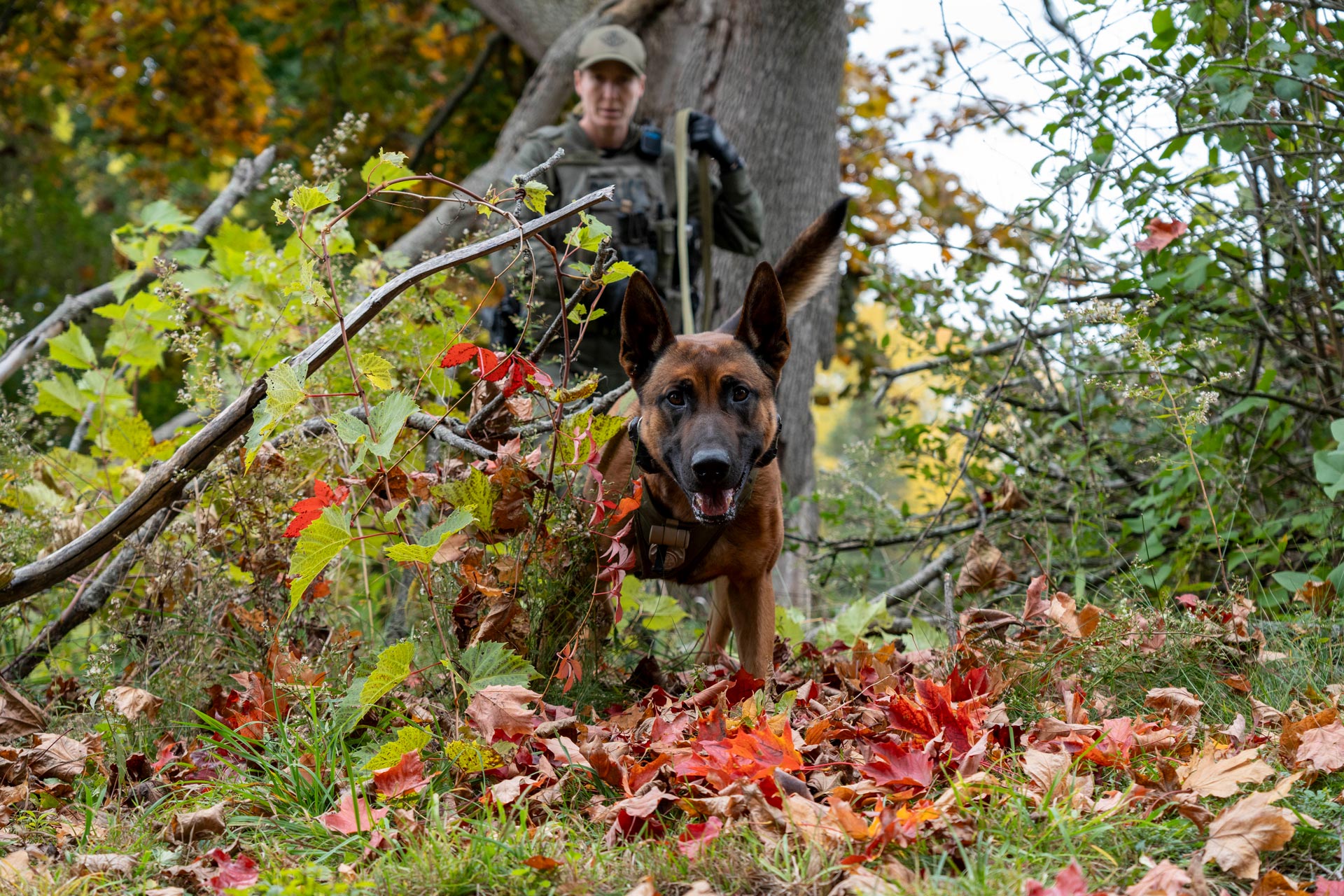
In addition to general service patrol dogs, the OPP canine teams possess dogs trained for specific scent detection duties such as explosives, narcotics and human remains. Each canine team is stationed at strategic locations throughout the province, providing canine support for search and rescue, criminal tracking, detecting narcotics and searching for human remains, firearms, explosives or physical evidence. The OPP also possesses tactically integrated canines supporting our Tactics Rescue Unit.
A Chaplain is a recognized and trained member of a religious or spiritual community who is qualified and engaged to provide emotional and spiritual support and guidance to members, retirees, auxiliaries and their families as requested in a multi-faith environment that also includes persons identifying with no religion.
The Chief Firearms Office administers the Firearms Act and related regulations in Ontario, and oversees the delivery of the federally approved Canadian Firearms Safety Course and the Canadian Restricted Firearms Safety Course.
The Chief Security Office has a lead role in coordinating safety and security efforts across the OPP to protect our people, assets, properties and information.
The OPP has a dedicated team of investigators whose role is to investigate people who make, import, export, sell, distribute, access or possess child pornography in the Province of Ontario. They also investigate cases of child luring over the Internet and other online offences to prevent the victimization and exploitation of children.
The Civil Litigation portfolio involves civil claims brought against His Majesty the King (naming His Majesty the King/OPP and/or employees (both active and retired)). Legal Coordination and Analysis Section in Risk Management Bureau leads this portfolio.
Civilian Data Entry (CDE) Unit is a frontline support program responsible for transcribing occurrence information dictated by frontline officers. CDE delivers efficiencies by removing the burden of data entry from frontline officers, enabling them to spend more time on core, frontline policing services.
The Clandestine Laboratory Investigative Response Team (CLIRT) is comprised of specifically trained members to investigate, assess and dismantle synthetic drug labs. CLIRT is complemented by the Urban Search & Rescue, Chemical, Biological, Radiological, Nuclear & Explosive (CBRNE) Response Team.
Collision Reporting Centres are used by police throughout the province to report minor collisions when all involved parties have refused medical assistance. Once involved motorists have exchanged the required information, they can leave the location of the collision and attend a collision reporting centre with the involved vehicle(s) to report the collision within the next 48 hours. This reduces delays for the motorist while they wait for an officer to arrive and ensures that police resources are deployed in an efficient manner.
The Commercial Motor Vehicles, Dangerous Goods and Towing program is responsible for policy compliance and liaising with relevant stakeholders. The OPP has Commercial Vehicle Safety Alliance certified inspectors who work closely with partner agencies to promote commercial vehicle safety and awareness.
Community Engagement Officers support detachment-led community policing initiatives focused on crime prevention, public safety, and community well-being. Community Engagement Officers build partnerships with community organizations, stakeholders, and media to support public education, lead community and youth engagement initiatives, deliver safety messaging, and support detachment-level responses to emerging community needs.
Community policing and community safety are guided by the principles of the Community Policing and Safety Act, 2019 (CSPA) and are grounded in proactive engagement, shared responsibility, and evidence-based practice. Through Ontario’s Mobilization and Engagement Model, the OPP works collaboratively with internal stakeholders, community partners, and cross-sector organizations to identify local needs, address risk factors, and deliver coordinated crime prevention and community safety initiatives that strengthen public trust and enhance community well-being across the province.
The Community Street Crime Unit (CSCU) is a program which combines the Organized Crime Enforcement Bureau and the detachment-based Street Crime Teams. The CSCU program is designed to tackle community level drug and property crimes and strengthens the OPP commitment to ensuring public safety and delivering proactive and innovative policing.
Under the Community Safety and Policing Act, members of the public have the right to file a complaint about police policy, service or conduct. The Ontario Provincial Police take complaints seriously. The Professional Standards Unit is responsible for investigating allegations of misconduct by an OPP officer.
The Critical Applications Support Section supports several of OPP’s mission-critical technologies, including Computer-Aided Dispatch (CAD), the CAD Support team maintains, develops, and enhances this platform along with its associated applications Netviewer, Mobile for Public Safety, and Mobile Responder. The applications maintained by this team ensure officers have accurate information and reliable tools for event management, situational awareness, and investigation to improve the efficiency of answering calls for service, dispatching officers and maintaining the status of responding resources in the field.
Corporate Communications Bureau oversees corporate events, internal and external corporate messaging, organizational correspondence, organizational media and public relations, and the development of strategic communications products.
Court Case Management is a cost-effective strategy to reduce the use of court-related resources and reduce court backlog. Successful programs are the result of cooperation between members of court agencies and police.
The Crime Analytical Support Team consists of highly-trained analysts who are directly assigned to support major case investigations through the production of complex analytical reports, event chronologies, data processing, link charts and other analytical tasks.
The Firearms Analysis and Tracing Enforcement Program traces the origins of and conducts analysis on all “crime guns” recovered in the Province of Ontario.
Violent Crime Linkage Analysis System (ViCLAS) is an investigative aid specifically designed to assist police agencies in identifying offenders committing violent crimes that may be serial in nature. The OPP manages the coordination of this system for Ontario.
Crime Stoppers is a not-for-profit, community-based charitable program that brings together the public, the media, and police in a collaborative effort to prevent and solve crime. By providing a secure and anonymous means for community members to share information, Crime Stoppers serves as a valuable investigative support to Ontario police services and contributes to safer communities across the province.
The Research Unit conducts research to enhance knowledge in areas like homicide and intimate partner violence. It develops tools for risk assessment and management, collaborates with various agencies and institutions and shares findings through forums. Additionally, it provides consultations, training and presentations.
The programs within Criminal Intelligence Production Section work to collect and process data and information into actionable intelligence.
Major Case Management is an approach to solving crimes and dealing with complex investigations that combines specialized police training and investigation techniques.
The Criminal Investigation Services Support Team is a team of highly trained Investigative Assistants who are engaged at the onset of an investigation to ensure that proper filing practices are employed by the entire investigative team.
Criminal Traffic Offences and Devices Program is responsible for the governance and oversight of breath alcohol testing in Ontario for the OPP and municipal police services, including the management and maintenance of testing equipment, quality assurance and inspection processes, designation and training delivery, provision of subject-matter expert and court support, and the administration of Approved Screening Device programs for the OPP.
The Crisis Call Diversion (CCD) Program embeds a mental‑health and addictions clinician directly within OPP Provincial Communications Centres to support callers who may be experiencing a crisis. Working alongside OPP Communications Operators, the clinician may be engaged with callers who consent to speak with a crisis worker, helping to de‑escalate situations, provide immediate support, and connect individuals to appropriate mental‑health resources—reducing the need for police response to low‑risk mental‑health calls.
Crisis Negotiators work as part of an integrated response with Incident Commanders, Tactical Units and Criminal Investigators. They respond throughout the province to assist in resolving crisis situations such as barricaded persons, hostage taking, high risk warrants and other high-risk incidents.
The OPP Emergency Management Unit participates as a partner within the Ontario Critical Infrastructure Assurance Program. This province-wide initiative identifies and assesses Ontario’s key facilities, systems and networks, and their interdependencies, and develops processes to mitigate them from physical and cyber threats and vulnerabilities.
The Cybercrime Investigations Team is responsible for investigating cybercrimes in the province of Ontario. The Team is also responsible for the collection and analysis of cybercrime intelligence data.
The Offender Transportation Program is responsible for the transportation of adults and youths, between secure institutions and the courts, on behalf of municipal police services as well as the OPP. The Offender Transportation Program is a cooperative between the Ministry of the Solicitor General, the Ministry of Child Community and Social Services and the OPP.
Digital Forensics provides innovative specialized investigative services to OPP members, Ontario municipal police services and government ministries dealing with investigations involving digital evidence. It assists with the identification, preservation, forensic recovery, analysis and interpretation of digital data derived from an electronic device whether stored locally or in the cloud.
The Drug Evaluation and Classification (DEC) Program is responsible for provincial oversight of drug-impaired driving enforcement, including the supervision of OPP Regional Impaired Specialists, the implementation and support of Standard Field Sobriety Test (SFST) and Drug Recognition Expert (DRE) training in accordance with International Association of Chiefs of Police (IACP) standards in partnership with the Ontario Police College (OPC) and the RCMP, the administration of DRE certification for the OPP and Ontario police services, the management of approved drug screening equipment, and the support of lawful, evidence-based, and court-defensible impaired operation investigations across Ontario.
The Emergency Management Program is coordinated with the Ministry of the Solicitor General, other ministries and municipalities. It consists of a set of activities, measures and plans that ensure a proactive and coordinated approach to managing emergencies and reducing risks.
The Emergency Management Unit is responsible for the maintenance and operations of the OPP General Headquarters Emergency Operations Centre. The OPP has service-specific Emergency Operation Centres located throughout the province that are responsible for the provincial coordination of OPP response to large scale provincial emergencies and initiatives.
The Emergency Response Team (ERT) program is comprised of highly trained and motivated members who directly support frontline operations. A large portion of the ERT mandate involves both elevated and high-risk situations where specialized equipment, training and subject matter expertise are required to enhance overall public safety while simultaneously minimizing the risks posed to involved officer(s).
The OPP Explosives Disposal Unit is responsible for the safe rendering of Improvised Explosive Devices and the disposal of abandoned explosives, military ordinance, ammunition and various hazardous substances. Members are deployed to strategic locations across the province and are also fully trained and certified in the use of explosive charges for breaching purposes during hostage rescue occurrences.
Facilities Section supports the maintenance and development of new and existing OPP facilities.
Ontario’s Family Information Liaison Unit operates under the Indigenous Justice Division of the Ministry of the Attorney General, and acts as a single point of contact for families of Missing and Murdered Indigenous Women and Girls (MMIWG), 2SLGBTQQIA+ people and Indigenous men and boys, to request and receive access to information about their lost loved one(s).
The Chief Firearms Office administers the licencing provisions of the Firearms Act and Regulations.
The OPP Financial Crime Services brings together two specialized units – the Anti-Rackets Branch (ARB) and the Serious Fraud Office (SFO). ARB provides expert investigative resources to the OPP, municipal police services and government ministries tackling complex fraud cases, while the SFO employs an integrated approach to investigating and prosecuting serious fraud. Together, these units aim to protect Ontario residents, minimize fraud victimization and recover fraudulently obtained assets. The OPP's Cyber-Enabled Fraud Team further strengthens Financial Crime Services’ capabilities by targeting sophisticated financial crimes, particularly those involving cryptocurrency and cyber-enabled components.
Financial Services Section ensures clear lines of accountability, stewardship of resources, and evaluation of results achieved. Procurement Services Section provides centralized procurement services to procure goods and services.
The Firearm Verification and Analysis Unit is responsible to meet statutory court requirements involving firearm testing and are permitted to identify and classify specific items for court purposes. Analysts also provide investigative support for incidents involving firearms, prohibited weapons, prohibited devices and ammunition, and support ongoing provincial initiatives.
The Forensic Artist and Reconstruction Unit provides forensic artist services to all law enforcement agencies and the justice system for the purpose of assisting in unidentified remains, missing persons and criminal investigations, and for the presentation of the resulting images and works in a court of law.
The Forensic Identification Services (FIS) CBRNE (Chemical, Biological, Radiological, Nuclear and Explosive) team consists of FIS members who are specifically trained to conduct forensic examinations in a CBRNE environment while wearing personal protective equipment.
Forensics is the general term used to describe the examination, collection and analysis of physical evidence (fingerprints, footwear, tire track, physical comparisons/matching) in relation to police investigations for the eventual presentation of these findings in a court of law. Specially trained forensic identification experts provide investigative support to the OPP and other police agencies across the province.
The Forensic Interviewing Team provides polygraph testing services and expertise in interview, interrogation and statement analysis to the OPP and other police services.
The Forensic Psychiatry Unit provides investigation support services, education and leadership in the area of psychiatry, behavioural sciences and medicine to criminal justice agencies in Ontario, Canada and internationally.
Forensic Video Analysis is the scientific examination, comparison and/or evaluation of video in legal matters. The Forensic Video Analysis Unit provides comprehensive and specialized investigative services to OPP members, Ontario municipal police services and government ministries.
The Frontline Support Unit (FSU) program is a differential response strategy that focuses on call management. Lower-priority calls are diverted to FSU officers, enabling frontline members to focus on higher-priority calls for service. This program also includes responsibility for the OPP Online Reporting Portal which is an online police reporting system that enables members of the public to report specific occurrences directly to the OPP via the Internet.
The OPP Geographic Information Services (GIS) program provides information management services to the organization with an emphasis on location and geography. This entails managing, developing and distributing applications and products that allow the OPP to promote, predict and analyze its own information more effectively. GIS assists by developing trends, patterns and tendencies in criminal activity by using the geographic location of where crimes occur.
The OPP Hate Crime/Extremism Unit is mandated to conduct multi-jurisdictional intelligence operations and to detect, deter, disrupt and monitor persons or groups involved in extremist ideologies and/or hatred that can lead to criminality.
The Historic Homicide Unit is dedicated to reviewing and advancing homicide and suspicious death investigations that have remained unsolved with a focus on current forensic techniques including Investigative Genetic Genealogy.
The Indigenous Awareness Training course provides OPP employees and policing partners with the opportunity to learn about the history, beliefs, customs and traditions of, as well as issues impacting Indigenous Peoples.
The Indigenous Policing Bureau centralizes strategic expertise and provides dedicated support and resources to ensure that the OPP develops and maintains the ability to appropriately respond to issues impacting Indigenous peoples. The IPB provides support and capacity building to contribute to effective First Nations policing and safe Indigenous communities.
The Intelligence Operations Section consists of strategically located units throughout the province to work collaboratively with OPP enforcement units, as well as municipal, provincial, federal, and international partners. This includes joint forces partnerships with other law enforcement agencies, where the OPP takes a lead coordinating role.
The Information Technology and Telecommunications Services (ITTS) program area is comprised of dedicated IT and telecommunications professionals who deliver a range of business-critical services, including service assurance, service delivery, assets and administration, special projects and relationships/change management.
The Investigation and Enforcement Bureau (IEB) is partnered with the Alcohol and Gaming Commission of Ontario (AGCO) to provide law enforcement in relation to in-person and online gaming, as well as other AGCO lines of business. IEB members have specialized training and expertise to conduct complex criminal and regulatory investigations, often involving intelligence probes and enforcement projects targeting money laundering, human trafficking, criminal interest rate, frauds, criminal cheat at play and other criminal offences related to corporate, liquor, lottery, legal cannabis and the horse racing industries throughout the province of Ontario.
Investigative Genetic Genealogy (IGG) is a valuable investigative technique that has the potential to assist unsolved investigations by identifying human remains and/or the perpetrator of serious violent offences including homicide, robbery, aggravated assault and sexual assault. IGG combines DNA analysis with traditional genealogy research to generate investigative leads.
The Joint Forces Penitentiary Squad conducts investigations relating to criminal activities within a federal correctional setting. The unit is an OPP-led combined investigative unit which also includes the RCMP, Kingston Police and the Correctional Services of Canada.
The Joint Technical Assistance Centre is an OPP-led joint force operation to facilitate lawful interception and electronic surveillance throughout the Province of Ontario.
The Justice Officials Protection and Investigation Section (JOPIS) provides assistance with investigations and/or takes a lead role in the safety planning measures for justice officials. JOPIS strives to bring the perpetrators to justice as well as addressing all safety needs of the justice official.
Major Incident Command is responsible for specialized services provided at the regional level by a trained Commander who manages the planning, response and recovery aspects of a major situation.
The Media Relations Team is a full-service, dedicated, and skilled team of strategic communications advisors, media and social media relations officers, translators, graphic designers, photographers, and videographers who provide communications services and support.
The OPP supports an evidence-based continuum of crisis response that includes, but is not limited to, a Crisis Call Diversion program, implementation of Mobile Crisis Response Teams and improving processes related to police-hospital transitions.
The Missing and Murdered Indigenous Women and Girls (MMIWG) Team mandate includes the creation and implementation of activities that respond to the Calls for Justice.
Mobile Crisis Response Team refers to a police-led crisis response model, where a police officer and a crisis worker respond together to a person in crisis where police are called and are obligated to respond.
The OPP is committed to ensuring a safe, enjoyable riding experience for all Motorized Snow Vehicle operators in all locations, including roadways, private property and trails not maintained by the Ontario Federation of Snowmobile Clubs.
The Ontario Centre for Missing Persons and Unidentified Remains is mandated to locate missing persons and identify found human remains.
The Ontario Corrections Intelligence Unit is a hybrid unit comprised of members from the Ministry of Solicitor General and members of the OPP. The Intelligence function supports key priorities that impact safety and aligns with the Correctional Services Roadmap to mitigate risk, invest in our people, and modernize the criminal justice system.
The Ontario Sex Offender Registry is an investigative tool utilized by police services to monitor and locate registered sex offenders residing in their jurisdiction.
Organized Crime Enforcement Bureau is mandated to disrupt and suppress organized crime. Within the enforcement of organized crime is a fundamental involvement in control and enforcement of drugs, contraband and firearms.
People Operations Bureau provides organizational human resources expertise and support in staffing processes, abilities management, workplace safety, workforce analytics, and labour relations.
Physical Security Threat Risk Assessment is an evaluation of the facility and property, locally identified risks, security practices during day-to-day operations, emerging security vulnerabilities and documented security events.
Information Management Section provides policy analysis and interpretation, manages and publishes approved policy, develops and maintains standardized records management tools and best practices for information management, and supports the response to Freedom of Information and other information-related requests.
The Prescription Drug Diversion Program is responsible for overseeing, assisting and participating in investigations regarding crimes involving prescription drugs.
The Protective Services Section provides intelligence-led, risk-informed protection for government dignitaries ensuring the safety and security of the Province of Ontario. Members identify, assess and manage threats to protectees and produce actionable intelligence and risk assessments in support of the section and its protective mandate.
The Alcohol and Gaming Commission of Ontario is responsible for ensuring that legalized commercial gaming, charitable gaming, horse racing and lotteries are conducted in the public interest and in a manner that is socially and financially responsible in Ontario. Oversight of these activities is the responsibility of members of the OPP Investigation and Enforcement Bureau.
The Anti-Human Trafficking Unit is responsible for Ontario's anti-human trafficking strategy. This is a partnership with 35 municipal police services and First Nations police services.
The Provincial Anti-Terrorism Section is an OPP-led joint forces operation comprised of intelligence officers from municipal, provincial and federal agencies mandated to conduct multi-jurisdictional strategic intelligence operations on matters involving international, domestic and issue-specific terrorism in Ontario.
The Provincial Asset Forfeiture Unit is an OPP-led joint-forces operation that provides subject matter expertise in the identification, seizure, restraint and forfeiture of offence-related property and proceeds of crime.
The Biker Enforcement Unit is a joint-forces operation mandated with curtailing the organized crime activities of outlaw motorcycle gangs in the province. Led by the OPP, it includes 21 municipal agencies and Criminal Intelligence Service Ontario.
Provincial Communications Operations is responsible for essential frontline communications services that provide a vital link between the citizens of Ontario and frontline police officers. As the first point of contact to the OPP, professional communicators located in four Provincial Communications Centre locations are committed to OPP's mandate. Provincial Communications Operations remains on the threshold of innovation and modernization.
The Contraband Tobacco Enforcement Team is dedicated to investigating the smuggling and trafficking of contraband tobacco. This team works closely with regional and international agencies to disrupt and dismantle sophisticated and wide-reaching contraband tobacco networks across Ontario.
The Provincial Cybercrime Strategy's mission is to manage risks, reduce threats and minimize harm caused by crime involving digital technologies. It supports frontline policing and community safety by building capacity and ensuring appropriate training, procedures and supports are implemented to enhance modern investigations as technology continues to advance.
The Provincial DNA Program is responsible for DNA data collection and analysis. It also coordinates working relationships with stakeholders and partners, monitoring compliance with legislated requirements in relation to DNA, and distributing, tracking and analyzing all results notifications, “Forensic Hits” and “Convicted Offender Hits” from the Centre of Forensic Sciences.
The OPP-led Provincial Joint Forces Guns and Gangs Enforcement Team is dedicated to disrupting criminal street gang activity through intelligence-led, multijurisdictional drug trafficking investigations, and to reducing the number of illegal firearms in the province of Ontario.
The OPP-led Provincial Joint Forces Cannabis Enforcement Team is responsible for enforcing cannabis laws and investigating criminal operations that exploit or abuse the legal cannabis market.
The Provincial Inquest Unit provides assistance in preparing and helping conduct inquests in the Province of Ontario. The investigators perform the role of Inquest Investigator or Inquest Constable during the inquest proceedings.
The Provincial Liaison Team (PLT) mandate is to establish and maintain open and transparent lines of communication with all stakeholders who may be affected, directly or indirectly, by major events or critical incidents. PLT members work to build relationships of trust, mutual understanding and respect between police and community members. PLT works with all involved parties in an attempt to facilitate a safe and lawful environment for free speech and peaceful assembly.
The Provincial Marine and Off-Road Vehicles Programs are responsible for training all OPP marine operators and Off-Road Vehicles (ORV) operators while deploying marine and ORV assets across OPP jurisdictional trails and waterways. The program provides expertise and support for OPP personnel as well as local, provincial and federal stakeholders and partners.
The OPP Motorcycle Program provides specialized support in traffic enforcement, dignitary escorts, and community patrol across the province. In addition to operational duties, the program represents the organization at community events, parades, festivals, and official functions. The Golden Helmets Precision Motorcycle Team further enhances this presence by showcasing the skill and professionalism of OPP motorcycle officers through public demonstrations and performances.
The Provincial Offences and Speed Device Management program provides expertise and support to OPP members and members of the public with Provincial Offences. This program is responsible for the oversight of OPP Speed Enforcement devices. The OPP provides support and oversees the Community Safety Zone applications for provincial roadways.
The Provincial Operations Centre is designed to fulfill the requirements of a modernized central command for OPP operations. Its mission is to effectively provide and maintain a real-time environment for all operational deployments and be the centralization of information management.
The Provincial Police Academy provides training and development opportunities for members of the OPP and affiliated municipal and regional services.
The Provincial Repeat Offender Parole Enforcement Squad is a multi-agency, provincial team that locates and apprehends parolees unlawfully at large in the province of Ontario, as well as anyone who: escapes from secure custody, escapes from or walks away from non-secure custody or becomes unlawfully at large by violating bail, parole or intermittent sentence terms.
On behalf of the Ministry of the Solicitor General, the OPP oversees the Provincial Strategy to Protect Children from Sexual Abuse and Exploitation on the Internet. This initiative involves the collaborative effort of the Government of Ontario and 25 municipal police services.
The Provincial Traffic Operations provides expert knowledge and support to field members in dedicated program areas related to traffic safety. The Provincial Traffic Operations is responsible for the provincial coordination of a wide range of OPP programs including Aircraft Enforcement Program, Provincial Countermeasures - Speed and Impaired Driving, Provincial Marine and Snowmobile Program, Provincial Off Road Vehicle Program, Dangerous Goods / Commercial Motor Vehicles, Provincial Motorcycle Program and the Provincial Technical Traffic Collision Investigator /Reconstruction Program, Drug Evaluation Classification Program (Drug Recognition Evaluation and Standardized Field Sobriety Testing) and Criminal Detection and Enforcement Program (CDEP).
The Provincial Weapons Enforcement Unit is a joint forces investigative unit under the direction of the OPP. The mandate of the PWEU is to identify and take enforcement action against persons involved in the illegal movement of firearms, ammunitions and explosives.
Psychological Services conducts research and supports the psychological testing for new recruits, special constables, auxiliaries and specialized team members.
The Public Order Unit is comprised of specialty trained and equipped members deployed as a section to assist with crowd management and crowd control. The mission of the Public Order Incident Command and section members is to proactively manage crowds at all levels of order.
Quality Assurance team delivers quality assurance inspections and programs throughout the OPP to ensure compliance with Provincial Adequacy Standards and OPP and Ministry of the Solicitor General policies.
The OPP supports the implementation and use of tools or technologies that support collecting better evidence, demonstrate transparency, encourage better citizen conduct during interactions with police and enhance public and officer safety. As part of this commitment, the OPP has a Recorded Patrol program which utilizes Body-Worn Cameras and In-Car Cameras which include integrated Automatic Licence Plate Recognition technology.
The OPP Records Management System (RMS) program is responsible for the maintenance, development, and support of the Niche RMS. The OPP is a member of the Ontario Police Technology Information Cooperative (OPTIC), which consists of 43 police agencies and provincial enforcement agencies which share a single Niche RMS installation. OPTIC is the largest data-sharing cooperative in North America, and the OPP is the largest member of OPTIC. Member agencies, including the OPP, maintain control over their own data within the RMS, allowing confidential materials to be restricted as necessary.
The Remotely Piloted Aircraft System (RPAS) fleet is comprised of 160 units deployed throughout the province. The OPP has primarily positioned RPAS in support of four critical areas: search and rescue, tactical support, forensic identification and collision reconstruction.
The Residential School Death Investigation Team is mandated to conduct Coroner's investigations into the reported deaths of Indigenous children who attended the 18 Indian Residential Schools in Ontario as listed by the National Centre for Truth and Reconciliation. The team strives to answer the questions of a Coroner's investigation including the determination of who died and when, where they died and were buried and manner/cause of death.
The Risk Offender Enforcement Unit is dedicated to providing quality investigative support, enforcement and monitoring of high-risk offenders upon release from federal or provincial institutions. The unit assists in ensuring that high risk offenders are effectively monitored within our communities.
Search and Rescue operations within OPP jurisdiction include members of specialized teams and assets located across the province under the mandate of the Emergency Response Team. The Teams are situated strategically around the province to react effectively when people become lost.
The OPP Security Assessment Unit (SAU) are the physical security specialists in the OPP. The SAU provides many specialized physical security services for the OPP and our Ontario justice sector partners.
The Security Enquiries Unit is responsible for conducting security clearance investigations on all new employees and contractors for Ontario Public Service, OPP and external stakeholders to determine their suitability for employment or for providing goods and services.
The OPP Service Desk provides information technology support services to OPP uniform, civilian and auxiliary members across Ontario by delivering informative and supportive advice, reducing service impacts and/or restoring services, and ensuring clients are making the best use of technology in their business roles.
Special Constable Appointments are reviewed and assessed, and recommendations for approval of the applicant are made to the Commissioner. The OPP liaises with employers, agencies or commanders requesting Special Constable Appointments.
Research, Planning and Analysis Section supports evidence-based strategic decision making and organizational reporting through research, data and statistical analysis, trend analysis, program evaluation, and research partnerships.
Strategy Management Section leads the organization in strategic and action planning and the related report back processes, and champions innovative solutions through member engagement and project management support.
The Physical Surveillance Unit provides investigative support to gather intelligence, establish patterns of behaviour, identify associates, effect high-risk mobile arrests and locate items that will be of an evidentiary value in order to support investigations. The Technical Operations Unit assists with the gathering of electronic evidence in support of major criminal investigations by providing technical expertise in electronic surveillance.
The OPP Tactical Emergency Medical Services program was created within the OPP to enable Advanced Care Paramedics to provide emergency medical care to a variety of OPP tactical incidents, when necessary.
The Tactics and Rescue Unit (TRU) is comprised of teams devoted to the safe resolution of high-risk incidents and the provision of expert tactical support services in specialized areas such as hostage rescue and high-risk warrants.
The OPP Technical Collision Investigation and Reconstruction Program supports the investigation of serious and fatal injury collisions.
The Technology Disclosure Program is responsible for managing data disclosure requests for the purpose of bail hearings, court (criminal, provincial or civil), Freedom of Information requests, and for third-party partners (e.g., Ministry of Transportation, First Nations, fire departments).
The Threat and Behaviour Analysis Team is comprised of members who have received specialized training in the use of empirically supported risk assessment tools and concepts. It provides law enforcement and other criminal justice agencies with threat assessment services and proactive approaches in the management of violent offenders.
Covert Operations Section provides leadership, expertise and innovation in covert operations in order to protect public safety, prevent and assist in solving crime through the efficient deployment of covert resources.
The OPP Underwater Search and Recovery Unit is responsible for providing safe and effective underwater search capability for the recovery of missing persons, evidence of major crimes and evidence of major incidents.
The OPP Uniform Recruitment Unit is responsible for hiring new recruits and experienced police officers. Recruiters engage applicants prior to application through the application process to first date of employment.
The Urban Search and Rescue Chemical, Biological, Radiological, Nuclear and Explosives (CBRNE) Response Team (UCRT) is a unit of highly trained specialists who have extensive skill and knowledge of CBRNE Response/Substance Analysis, Air Monitoring, Decontamination, Technical Search, High Angle Rescue/Recovery, Auto Extrication, Obstruction and Removal and Confined Space Operations.
The Victim-Centred Approach Team implements the pillars of the OPP Framework for a Victim-Centred Approach by engaging with our members, our community partners, victim support organizations, and other stakeholders to assist and understand the needs of victims/survivors. This approach ensures victims are afforded their legislated rights and are supported throughout the investigative process.
The Victim Response Support Unit (VRSU) provides consultation and guidance on abuse-related investigations across the OPP. This includes cases involving sexual assault, intimate partner violence, child abuse/neglect, older persons/vulnerable adults, and persons with disabilities. With a focus on victim-centred, trauma-informed practices, the VRSU strives to ensure that the most current and effective investigative approaches are employed to support vulnerable victims. This work aligns with the OPP’s Mission to protect citizens, uphold the law and preserve public safety.
The Witness Protection Unit is responsible for administering all responsibilities as they relate to Witness Protection in accordance with the policy and guidelines of the Ministry of the Attorney General. The unit is also responsible for administering OPP matters related to Police Agent Assessments.


