TOP
Officers patrolling in the community

Our Organization

The Commissioner is the highest-ranking member of the OPP and is responsible for overseeing all aspects of the organization. The OPP is comprised of five commands:
  • Culture and Strategy Services
  • Field Operations
  • Investigations and Organized Crime
  • Traffic Safety and Operational Support
  • Corporate Services
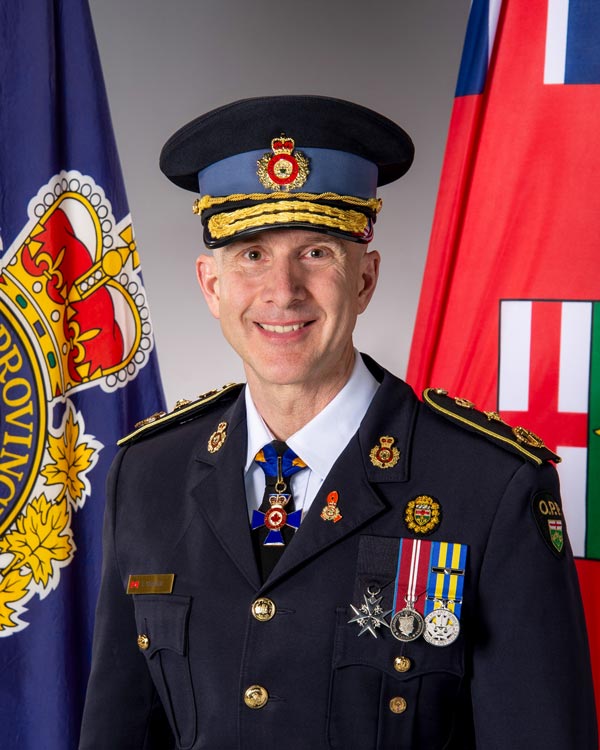
OPP Commissioner Thomas Carrique

Thomas Carrique

Commissioner

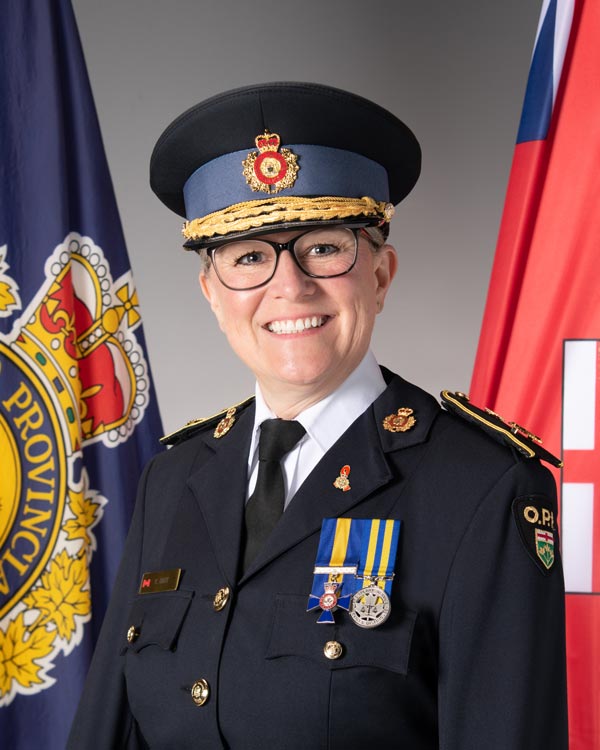
Deputy Commissioner Kari Dart

Kari Dart

Deputy Commissioner
Provincial Commander

expand icon

Culture and Strategy Services

Corporate Communications Bureau

Office of Professionalism, Respect, Inclusion and Leadership

Risk Management Bureau*

Strategic Services Bureau

Training and Recruitment Bureau*
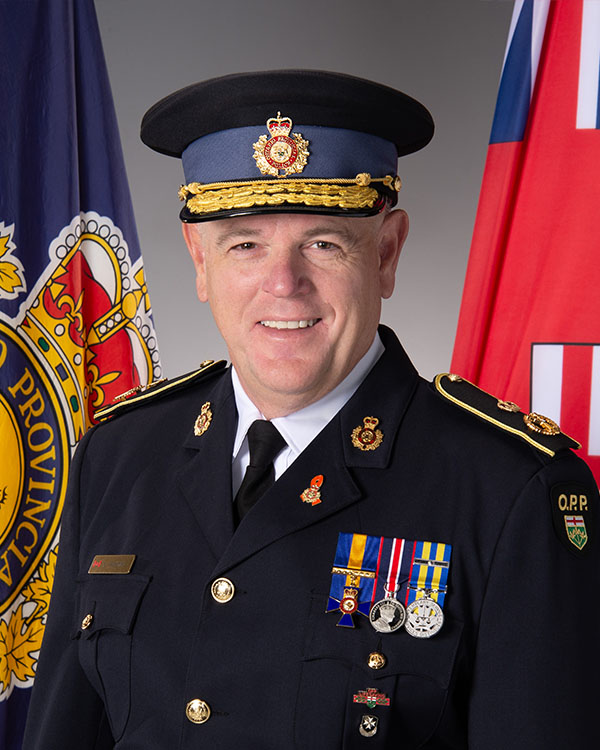
Deputy Commissioner Chris Harkins

Chris Harkins

Deputy Commissioner
Provincial Commander

expand icon

Field Operations

Central Region

East Region

North East Region

North West Region

West Region

Crime Prevention and Community Support Bureau

Healthy Workplace Team
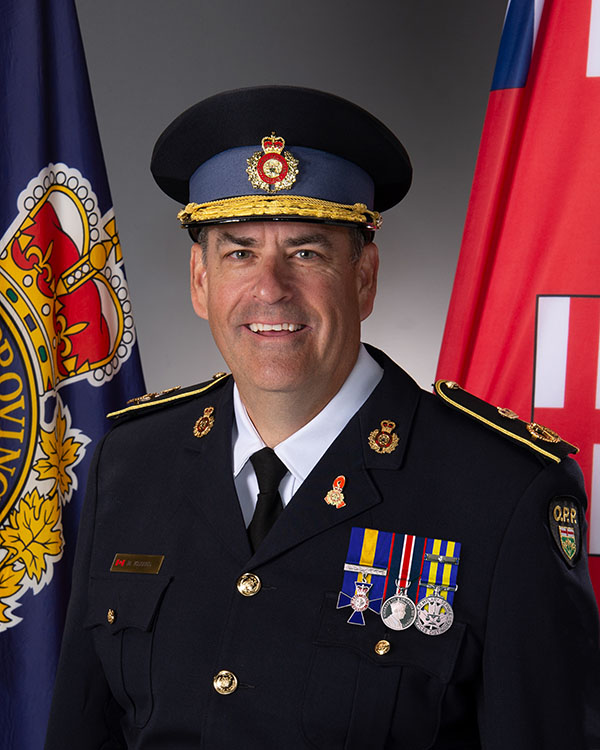
Deputy Commissioner Marty Kearns

Marty Kearns

Deputy Commissioner
Provincial Commander

expand icon

Investigations and Organized Crime

Chief Firearms Office

Investigation and Enforcement Bureau

Investigation and Support Bureau

Operations Support Centre

Organized Crime Enforcement Bureau

Provincial Operations Intelligence Bureau
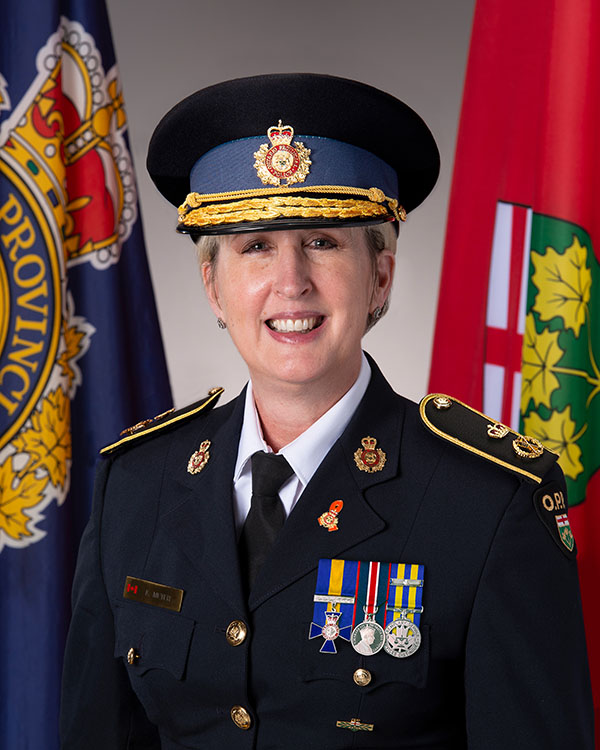
Deputy Commissioner Karen Meyer

Karen Meyer

Deputy Commissioner
Provincial Commander

expand icon

Traffic Safety and Operational Support

Communications and Technology Services Bureau

Field Support Bureau

Fleet, Supply and Weapons Services Bureau

Highway Safety Division

Indigenous Policing Bureau

Security Bureau
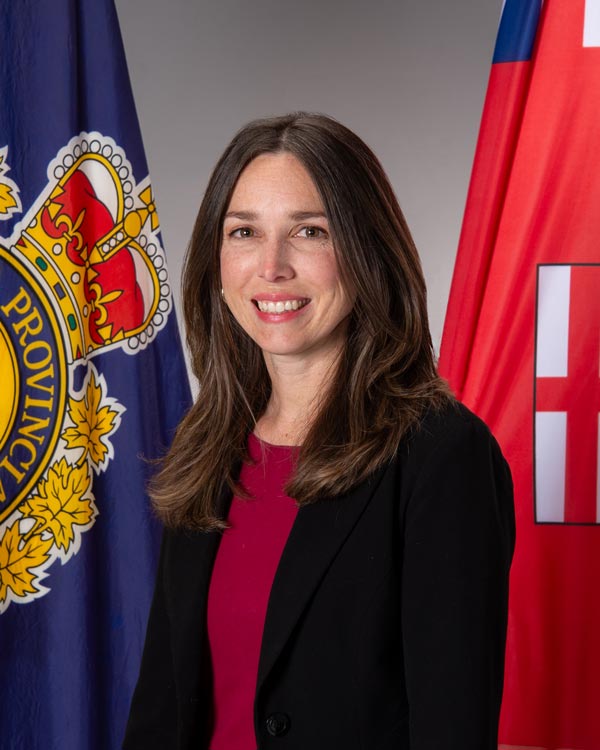
Chief Corporate Services Officer Michelle McRae

Michelle McRae

Chief Corporate Services Officer

expand icon

Corporate Services

Business Management Bureau

People Operations Bureau*

* Bureaus established in 2025 realignment of programs and services

2023-2025 Strategic Plan
Progress and Achievements

The 2023-2025 Strategic Plan built on past OPP successes, reinvigorated ongoing commitments, and embraced the evolving landscape of policing. It outlined how the OPP would adapt to emerging trends in crime, technology, and society, while meeting public safety responsibilities and preserving the vital policing services delivered in Ontario.

2025 marks the end of the 2023-2025 strategic planning cycle. Over the last three years, the OPP has tracked, measured, and monitored organizational progress using a variety of quantitative and qualitative indicators, including the information contained in this Annual Report.

The 2025 Annual Report is intentionally structured around the 2023-2025 OPP Strategic Priorities – People, Work and Communities – and provides data, highlights, and results in alignment with these priorities.

The 2025 achievements summary table provides an overview of the achievements from the past year that supported the OPP in meeting its strategic priorities. Further details are provided throughout the 2025 Annual Report.
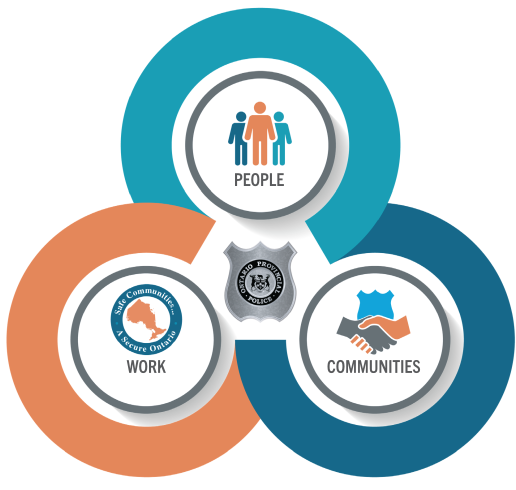
Graphic - Strategic Plan
People
A healthy and resilient OPP
We will strive to support all members in achieving their professional and personal best.
Work
A responsive and evolving OPP
We will empower our members to ensure the best possible policing services are delivered to Ontarians.
Communities
A collaborative and progressive OPP
We will partner and build relationships with a shared vision for safety and well-being.
Swipe to see more →

PEOPLE

An empowered, respectful and responsible workforce connected to its vision, mission and values

Primary Areas of Strategic Focus
Key Strategic Change Initiatives
Long-Term Outcomes
2025 Achievements
People-centred and effective processes
Deliver a modernized, equitable and merit-based talent management and development framework.
People processes are free from systemic obstacles resulting in the OPP being a progressive employer of choice.
  • Resources and services were re-aligned to create People Operations Bureau, a dedicated bureau to provide human resources support
  • 396 promotions
  • 828 members hired in permanent positions (552 uniform members, 276 civilian members)
  • Over 1,500 OPP members have completed people-centred leadership workshops
Resiliency, physical and mental health, and well-being
Integrate the 13 factors of psychological health and safety in the workplace.
Physical and psychological well-being and safety of employees are prioritized to promote resiliency.
  • Healthy Workplace Team expanded to include a second psychologist and additional mental health clinicians
  • The Health Reassignment Program supported over 3,200 return to work meetings and the review of over 30,000 job postings for potential matches
  • Peer Support program established regional teams
  • Introduced a Wellness Service Dog Program
  • Launched a Financial Wellness Program
Member engagement
Engage employees across all ranks and levels to participate in innovation seeking, decision-making and problem-solving.
Values-driven leadership that is responsible, innovative and collaborative fosters an engaged workforce that participates in positive change.
  • Planning engagements included 33 meetings with different detachment members representing the five Regions and Highway Safety Division and 23 meetings with subject matter experts across all OPP Bureaus
  • The Innovations from our Frontline Team received 60% more submissions through the i:Suggest tool over 2024
Swipe to see more →

Work

An enabled organization equipped to meet its policing responsibilities

Primary Areas of Strategic Focus
Key Strategic Change Initiatives
Long-Term Outcomes
2025 Achievements
Staffing and deployment
Apply data-driven and member-informed deployment and modernized scheduling practices.
Resources are optimized and balanced alongside operational demand and employee well being to meet public and stakeholder expectations.
  • The Service Delivery Model continued to be implemented across detachments, full implementation is expected by 2028.
  • Comparison to data from pre-implementation of the Service Delivery Model shows officer activity trending towards established provincial goals aligned to demands for service.
Investigations and frontline operations
Deliver modernized scalable, adaptable and flexible investigative and service delivery options.
The OPP is adequately equipped to manage the scope, volume and complexity of investigations and operations.
  • Investigative Genetic Genealogy continued to be used as an investigative tool to support the identification of remains and offenders
  • Increased training offered by the Criminal Detection and Enforcement Program to enhance the detection of criminal activity during traffic stops
  • New fixed wing aircraft acquired to support personnel and prisoner transport
Evidence-based decision making
Implement effective, accountable and transparent public safety solutions and evaluate outcomes.
The best-available evidence is readily accessible to demonstrate transparency and enhance public and officer safety.
  • Bail Compliance Dashboard expansion continued, and ongoing upgrades were implemented to strengthen officer and public safety
  • Recorded Patrol Program enhancements continued, including the use of in-car cameras, automated license plate recognition, and body-worn cameras
Swipe to see more →

Communities

An engaged organization positioned to co-create meaningful public safety solutions for Ontarians

Primary Areas of Strategic Focus
Key Strategic Change Initiatives
Long-Term Outcomes
2025 Achievements
Community engagement
Seek and amplify Indigenous and diverse voices and experiences to inform and design relevant policing programs and services.
Inclusive and equitable public safety solutions are co-created and delivered to meet the needs of communities.
  • Maintained regular engagement with the Provincial and Regional Indigenous Advisory Circles to increase communication with Indigenous community members and contribute to meaningful Indigenous-led enhancements to OPP policy and practice
  • Led and participated in community initiatives across the province, including 2,131 community events, 2,079 community meetings, 1,701 presentations to community members, and 1,091 school visits
Victim-centred programs and services
Embed trauma-informed approaches.
Public trust and confidence and community satisfaction are reflective of our efforts and intended outcomes.
  • The 13 OPP Victim Specialists provided more than 6,200 hours of direct assistance to 2,659 victims/survivors
  • The Victim Response Support Unit continued expand its mandate to ensure the most current and effective investigative approaches are employed to support vulnerable victims
  • The Provincial Police Academy received Ontario Police College accreditation to host Intimate Partner Violence Investigations and Older Adult Abuse Investigations courses
Collaboration across justice, law enforcement, human and social sectors
Lead operational and strategic policing and community safety initiatives in accordance with the needs of the population and having regard for the diversity of the population.
Cooperation exists for the inclusive response to a complex range of public safety and societal issues present across the policing landscape.
  • Continued to lead and collaborate with community safety partners on projects, initiatives, and teams such as the Provincial Internet Child Exploitation Strategy, the Provincial Human Trafficking Intelligence-Led Joint Force Strategy, and the Border Drug Interdiction Task Force
  • Increased engagement with Ministry partners for 2026-2029 strategic planning

Programs & Services

The OPP is comprised of various specialized programs and services that help serve the province. For a complete list of our programs and services, click Learn More.
Learn More
OPP ERT patch
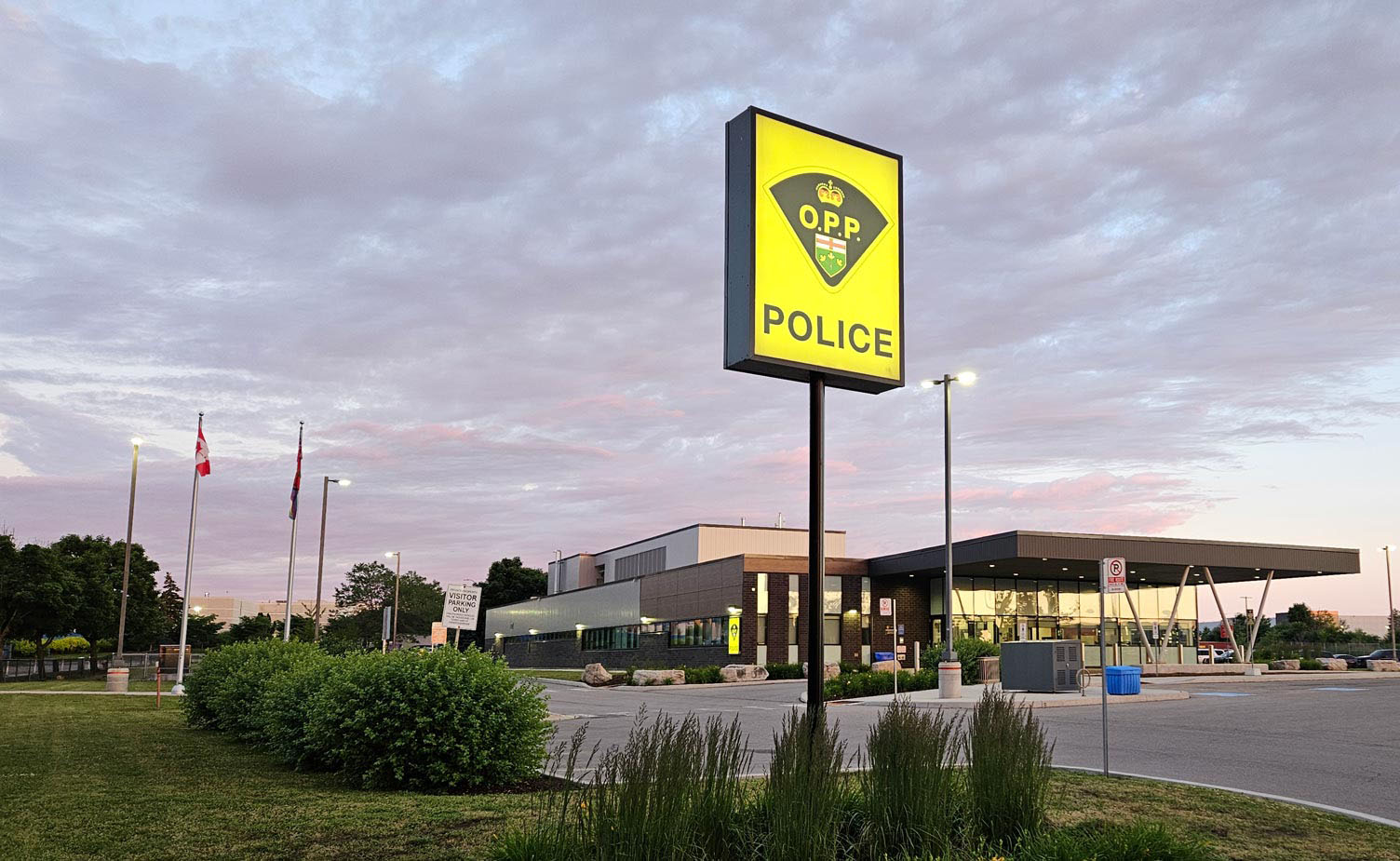
OPP Detachment Exterior

Regions & Detachments

INTERACTIVE MAPS

Serving
the Province of Ontario

The OPP delivers mission-focused and values-based policing that follows the Community Safety and Policing Act, 2019, S.O. 2019, c. 1, Sched. 1 (CSPA), Canadian Charter of Rights and Freedoms and the Ontario Human Rights Code. Updates to the CSPA and associated regulations, new legislation, case law, other legal decisions, standards, and guidelines also dictate policing responsibilities.

Under the Ontario First Nations Policing Agreement (OFNPA), the OPP provides administrative support for 17 First Nations police services and policing to three First Nations under Stream Two Agreements. There are an additional 22 First Nations that are directly policed by the OPP.

All OPP services, policies, practices, processes, and programs reflect the organizational vision, mission and values.

Our vision inspires the delivery of adequate and effective policing under a multi-faceted and complex mandate. Safe Communities... incorporates the provision of detachment-based and frontline policing for the majority of Ontario’s municipalities, roadways, trails, and waterways. As the province’s police service of jurisdiction, A Secure Ontario includes:

Our mission reaffirms the organization’s collective direction, reflects its shared responsibilities and makes clear the expectations of its members, communities, stakeholders, and partners.

The values of the OPP are the cultural cornerstones that guide all behaviours and actions of OPP members, each and every day. They represent what the organization stands for and how it will uphold the trust and confidence of the people we serve.

Under its unique mandate, the OPP embraces its role as a partner in the delivery of essential services that ensure the safety and security of the people of the province of Ontario.
Securing
the Province of Ontario

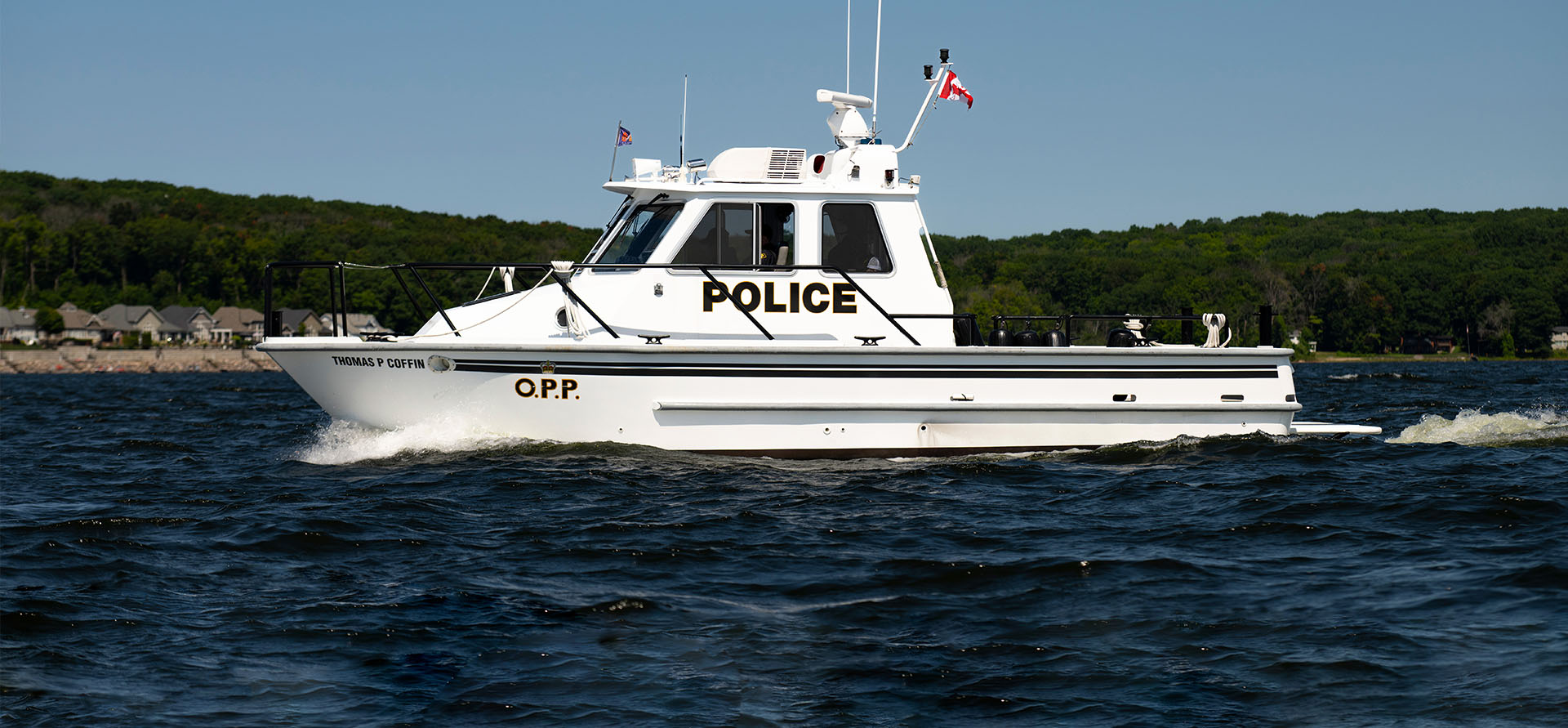
OPP Marine vessel

The OPP is Responsible for Policing:

900+ THOUSAND KM²
OF LAND
99+ THOUSAND KM²
OF PROVINCIAL WATERWAYS
A VAST MULTI-USE
TRAIL SYSTEM
130+ THOUSAND KM OF PROVINCIAL HIGHWAYS

There are approximately 500 OPP facilities across the province, including:

Icon of detachment

147 Detachment Locations
(Host and Satellite)

Icon of forensic identification unit

13 Forensic Identification Unit Locations

Icon of Provincial Communication Centre

4 Provincial Communication Centres

Icon of Regional Headquarters

5 Regional Headquarters

Icon of Divisional Headquarters

1 Divisional Headquarters
(Highway Safety Division)

Icon of General Headquarters

1 General Headquarters

Note: OPP facilities include government-owned, third-party leases, or municipality-provided buildings, and include a mixture of detachments, regional headquarters, forensic identification labs, Provincial Communications Centres (PCCs), training centres, special investigative facilities, administrative offices, and other special purpose facilities such as ranges.
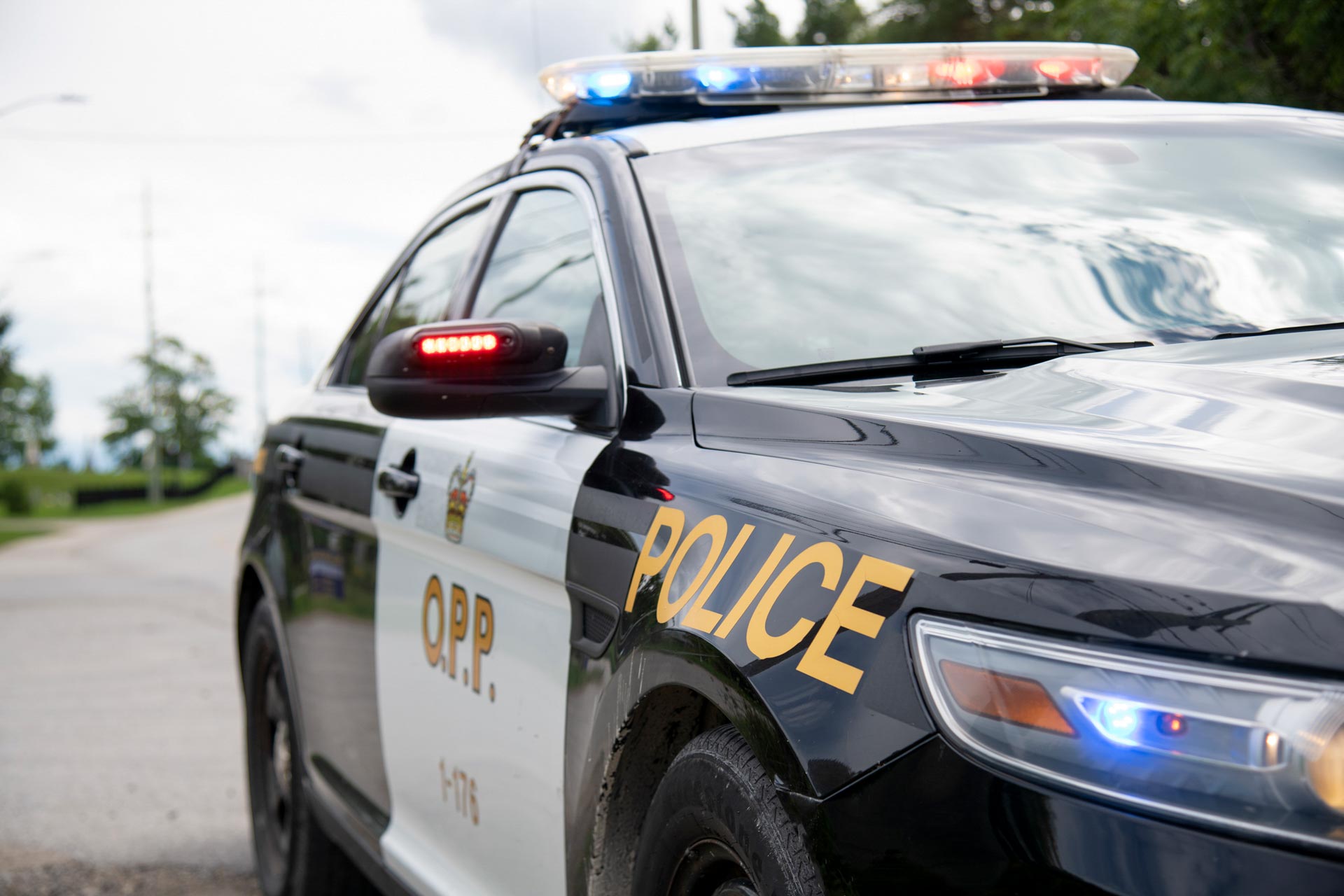
OPP vehicle

In 2025, OPP vehicles
logged approximately

129,281,814 KM

5,556

OPP vehicles

4,497

Road vehicles

1,842

Vehicles with Mobile Workstations (MWS)

1,059

Seasonal vehicles

2,359

Units with
Telematics Tracking

Reconciliation and Enhancing Relationships with Indigenous Peoples

The OPP continues to take meaningful action toward reconciliation with Indigenous Peoples, working collaboratively with community, policing, and ministry partners to build relationships and address the unique public safety needs of Indigenous communities in Ontario.

In 2025:

  • The OPP, led by Indigenous Policing Bureau, collaborated with First Nations leadership, OPP detachments, and provincial and federal partners to address recommendations in The Mental Health Review of Ontario First Nations Policing Agreement (OFNPA) Police Services released in January 2025.
  • Indigenous Awareness Training content continued to be delivered as part of onboarding processes to over 3,800 participants from internal and external agencies, including Ontario Police College recruits, auxiliary members, special constables, experienced police officers, cadets, and OPP Provincial Communications Centres members.
  • Seventeen (17) sessions of the week-long Indigenous Awareness Training Course were hosted across the province, with more than 300 participants completing the course.
  • Regular meetings and engagement with the Provincial and Regional Indigenous Advisory Circles increased communication with Indigenous community members and contributed to meaningful Indigenous-led enhancements to OPP policy and practice.
  • The OPP continued to be an advocate for modern, adequately resourced and effective policing in all Indigenous communities and maintained strong working relationships with First Nation and municipal policing partners to work toward these common goals.
  • The OPP police recruit graduation ceremony continued to be hosted within an Indigenous community, underscoring the importance of continued cross-jurisdictional and community relationships in influencing positive change and fostering trust and confidence in policing.
  • Indigenous community engagement was strengthened, including OPP participation in events like the Little Native Hockey League (LNHL) and Indspire’s 2025 Soaring: Indigenous Youth Empowerment Gathering.
  • Construction began to transform the Indigenous Policing Bureau indoor and outdoor spaces at OPP General Headquarters into a culturally responsive environment for Indigenous OPP members, partners, and community members.
  • The Indigenous Policing Bureau hosted a commemorative ceremony at OPP General Headquarters to mark 30 years since the Ipperwash Crisis. The event reflected on the Inquiry’s lasting impact on policing in Ontario and reaffirmed the OPP’s ongoing commitment to addressing its recommendations, advancing reconciliation, and strengthening relationships with Indigenous Peoples and communities.

The OPP remains committed to earning and building trust and confidence within Indigenous communities across Ontario and providing effective and culturally responsive policing services.
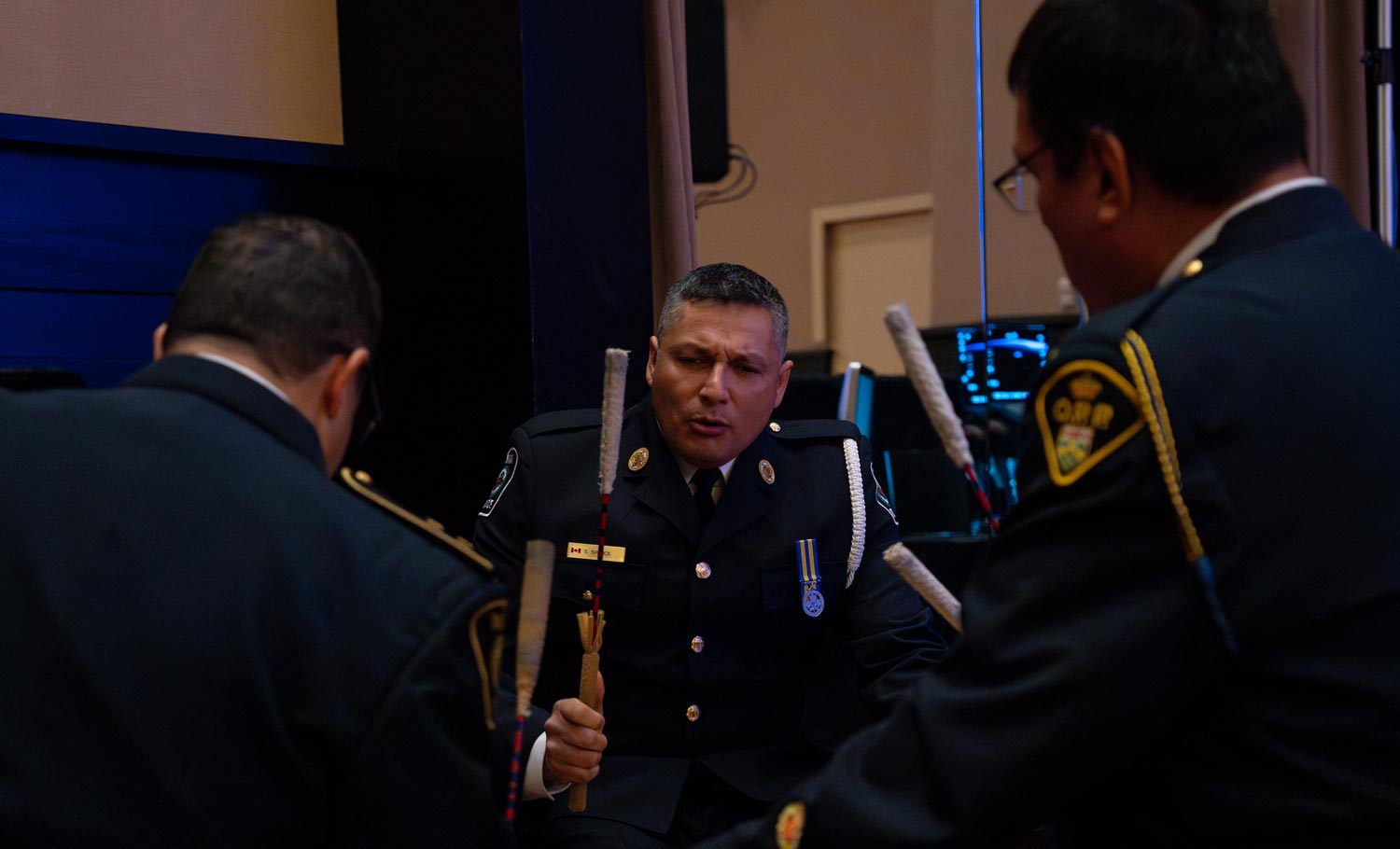
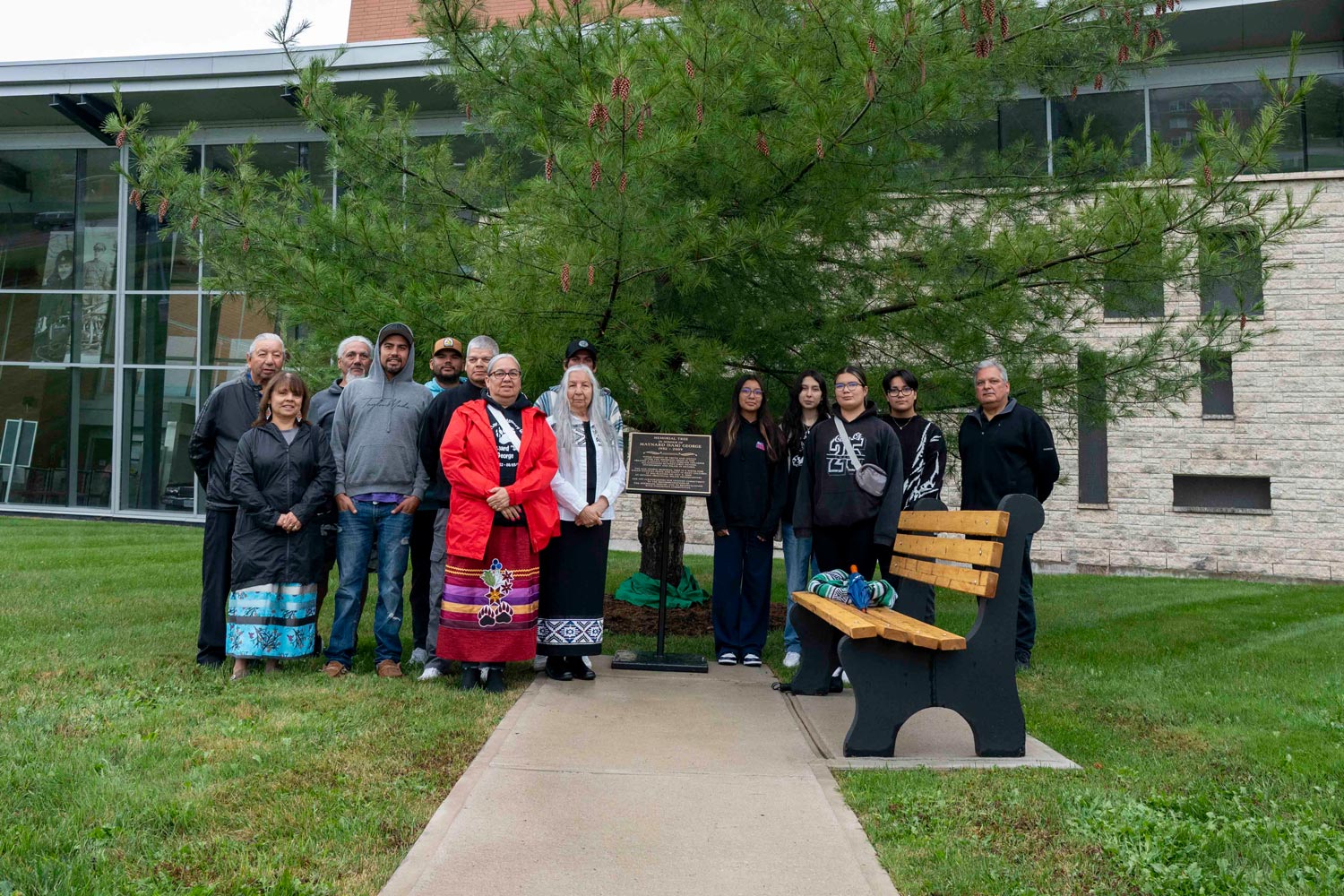
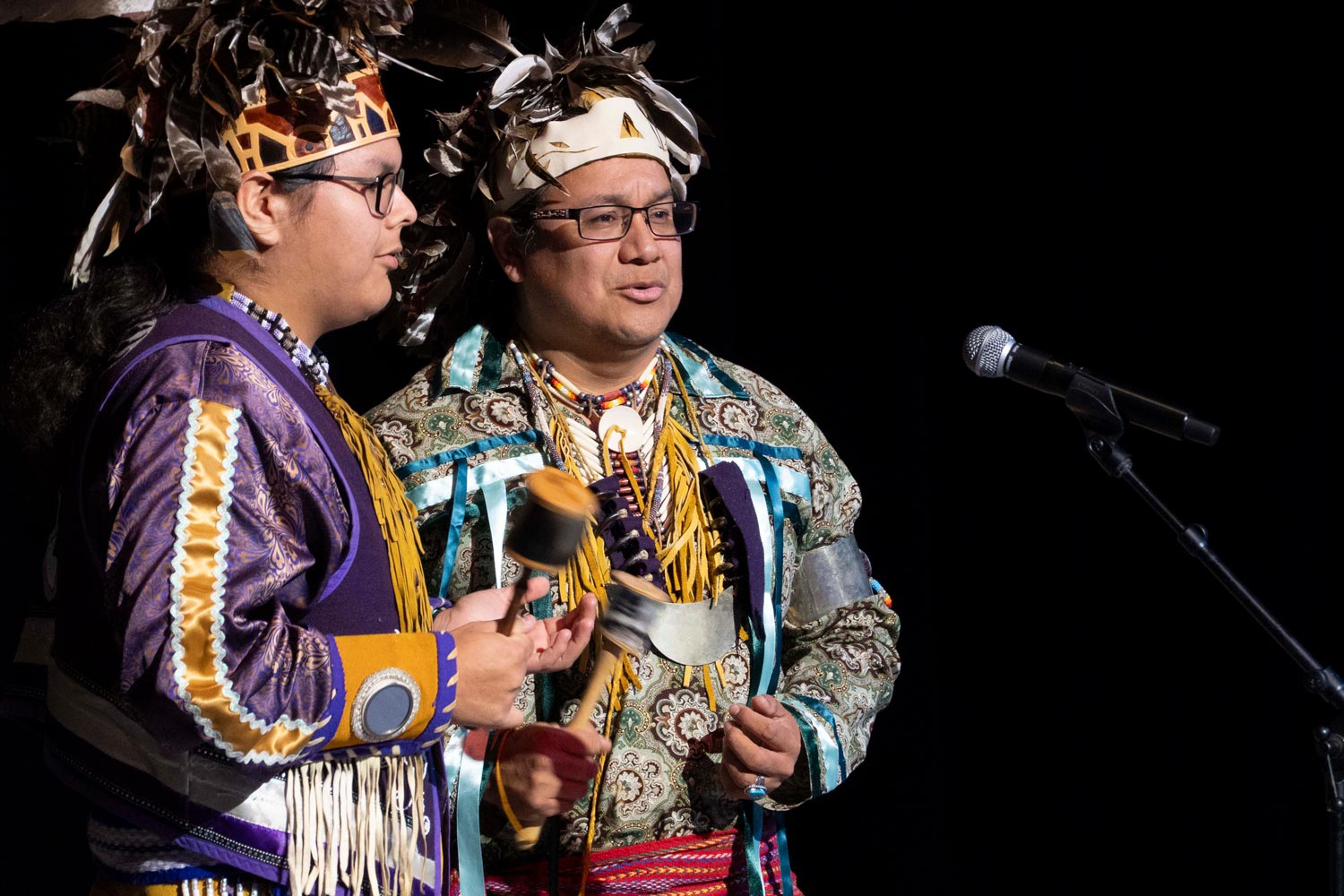
Indigenous police officers drumming at a community event Community members with the Sam George Memorial Tree at OPP GHQ Singers at OPP graduation

Our People

OPP Uniform Member

Uniform

Female Male Unspecified Total
Cadet 18 22   40
Constable 1,003 3,814 101 4,918
Sergeant 170 944 5 1,119
Sergeant Major 2 7   9
Staff Sergeant 65 208   273
Inspector 42 120 1 163
Superintendent 11 33   44
Chief Superintendent 4 12   16
Deputy Commissioner 2 2   4
Commissioner   1   1
Uniform Total* 1,371 5,163 107 6,587
  19.99% 78.38% 1.62% 100%
OPP Civilian Member

Civilian

Female Male Unspecified Total
Special Constable 205 245 13 463
Non-Manager 1,831 785 92 2,708
Manager 55 26 4 85
Chief Corporate Services Officer 1      
Civilian Total* 2,092 1,056 109 3,257
  64.22% 32.43% 3.35% 100%
Workforce Total
Female Male Unspecified Total
3,409 6,219 216 9,844
34.36% 63.43% 2.22% 100%

* Does not include Ontario First Nations Policing Agreement (OFNPA) Uniform and Civilian members
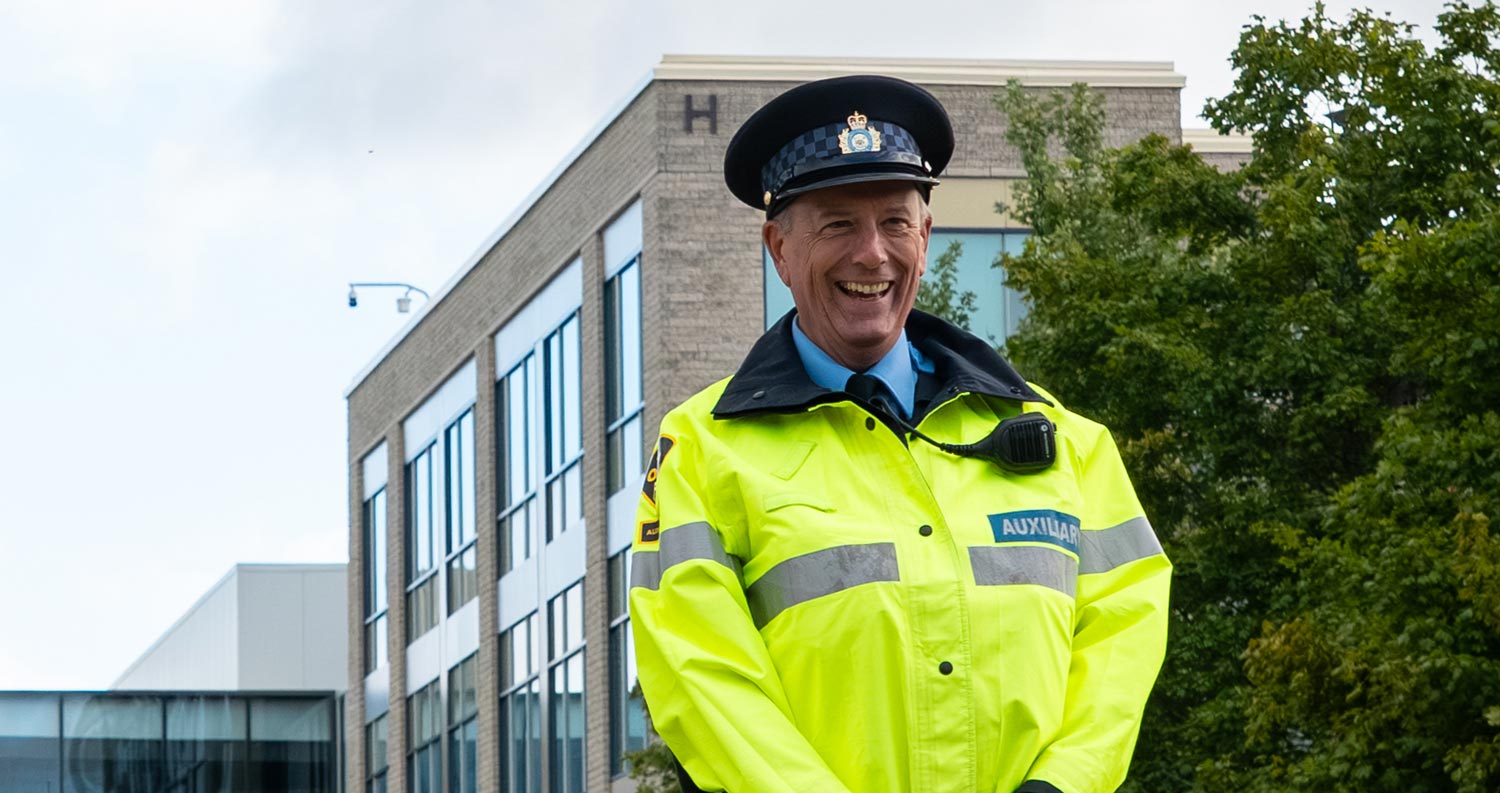
OPP Auxiliary Member

Auxiliary

Female Male Total
Constable 82 282 364
Sergeant 19 65 84
Staff Sergeant 9 40 49
Inspector 1 7 8
Superintendent 0 2 2
Auxiliary Total 111 396 507
  21.89% 78.11% 100%

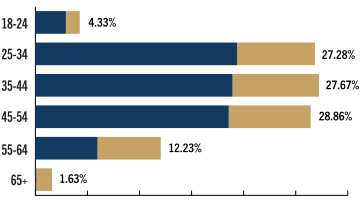
Workforce by Age

UNIFORM
CIVILIAN
Chart - Workforce by age

* Does not include OFNPA Uniform and Civilian members
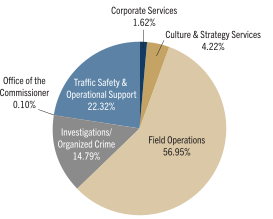
Workforce by Command

Chart - Workforce by Command

* Does not include OFNPA Uniform and Civilian members
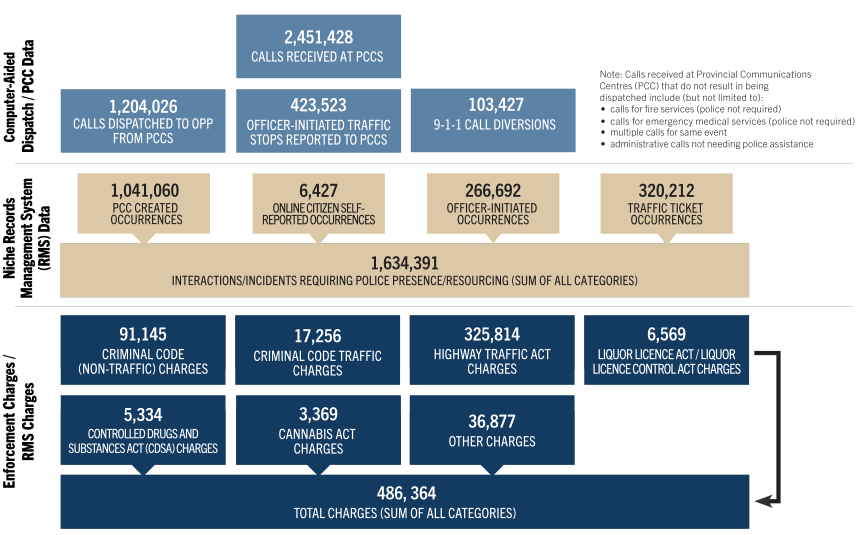
Our Work in Numbers

Chart - Our work in numbers

Crisis Call Diversion

2023 2024 2025
# of engagements 2,443 4,636 3,812
# of diversions 831 1,676 1,539
# of community referrals 2,632 3,696 3,245
# of follow up
appointments/emails
318 440 376
Diversion rate - % calls
handled by CCD workers
34% 36% 40%

Sources:
Computer Aided Dispatch (CAD). Data retrieved January 06, 2026.
Niche RMS. Data retrieved January 06, 2026.
Partner agency databases. Data received January 2026.

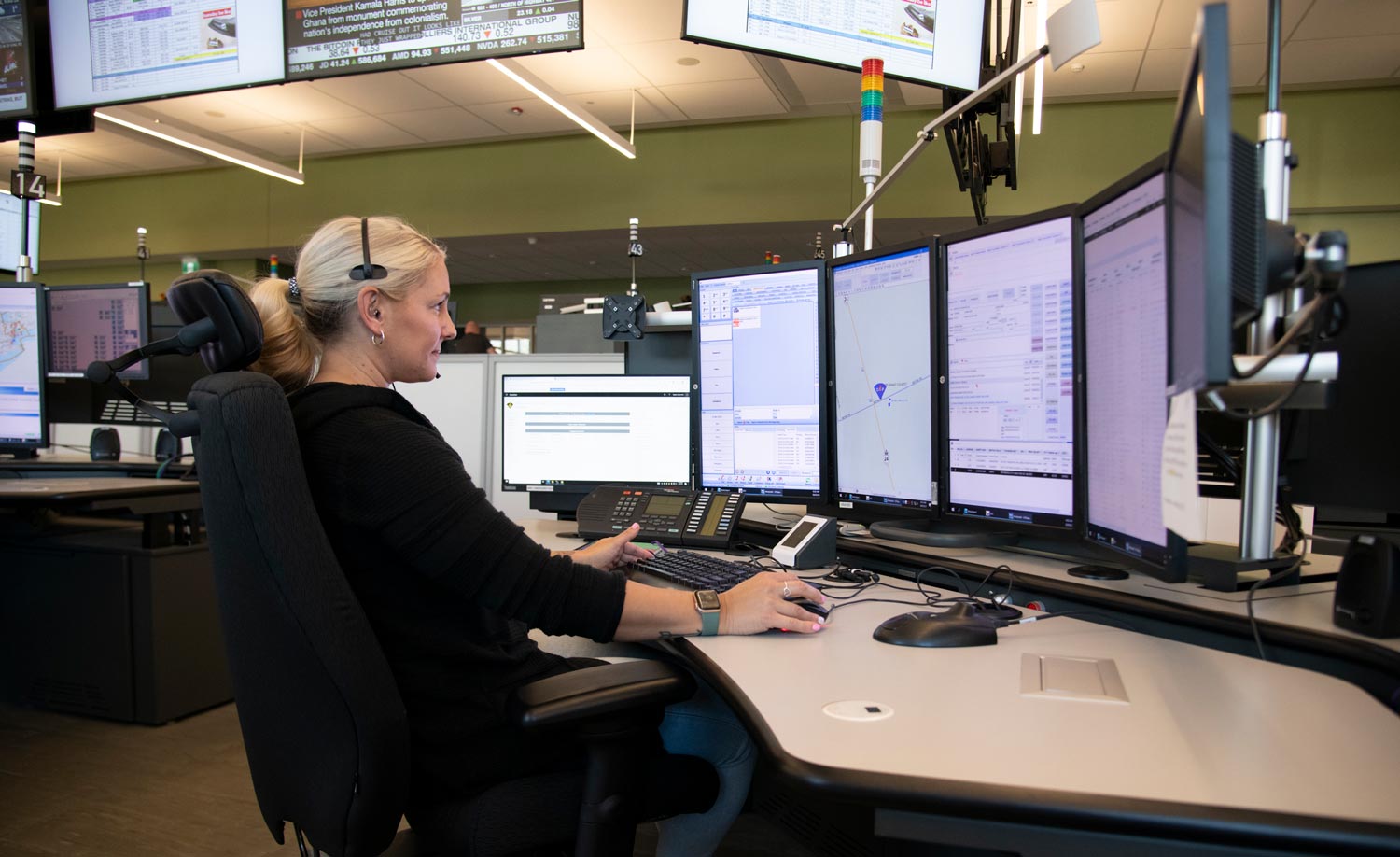
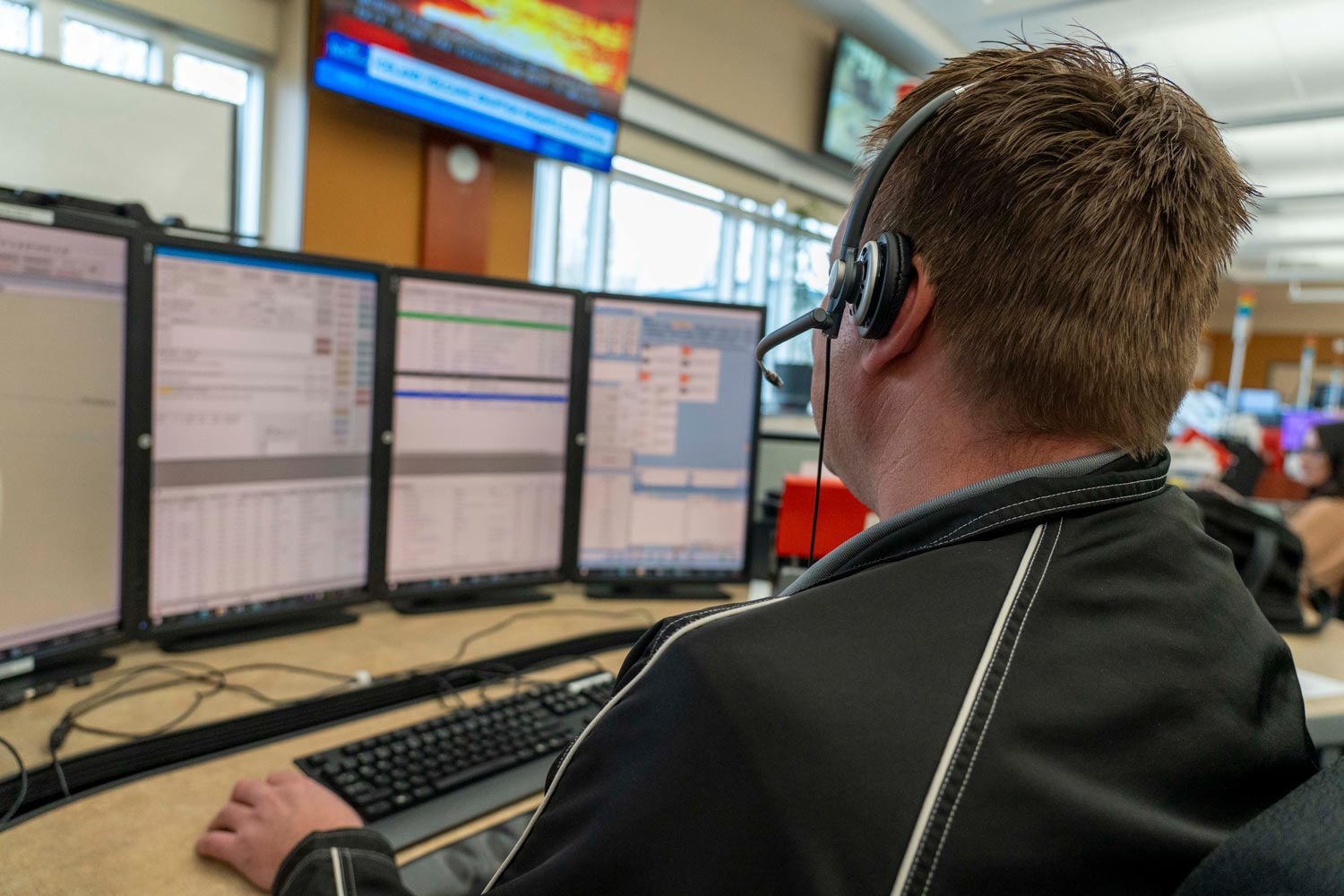
OPP PCC Operator

Hours of Frontline Policing

Updated: January 7, 2026 | Source: DAR

Region 2023 2024 2025 % Change
2024-2025
Central Region 1,613,540.50 1,750,986.60 1,824,859.00 4.22%
North West Region 944,347.15 994,030.00 1,057,139.00 6.35%
East Region 1,679,404.01 1,714,277.55 1,810,649.75 5.62%
North East Region 1,105,801.25 1,196,486.05 1,292,809.25 8.05%
Highway Safety Division 627,883.00 642,968.71 682,462.25 6.14%
West Region 2,115,067.70 2,241,292.20 2,325,467.00 3.76%
Total 8,086,043.61 8,540,041.11 8,993,386.25 5.31%

Notes:
Includes Provincial Constable to Sergeant ranks only.
Excludes paid duties.
Excludes incomplete DAR entries and those with errors.
Excludes General Headquarters location codes

Service Delivery Model

The OPP has developed an evidence-based Service Delivery Model (SDM) in response to multiple reviews and audit recommendations, including the Office of the Auditor General of Ontario’s 2021 Value for Money Audit. These reviews highlighted the need for a standardized approach to detachment staffing that addresses chronic understaffing, vacancies driven by stress related leave, and reduced capacity for proactive policing.

The SDM establishes appropriate frontline staffing levels at each detachment by balancing workload, operational demands, and officer wellness. It incorporates a broad range of organizational and policing sector aligned data and is designed to be regularly updated as new information becomes available. The model supports the continued delivery of adequate and effective policing services in accordance with the Community Safety and Policing Act (CSPA).

To implement the SDM, the OPP is carrying out a multiyear staffing strategy (2022–2028) to ensure appropriate staffing levels at all detachments. This will strengthen the OPP’s ability to:

To monitor progress and guide detachment level planning, the OPP has established provincial time allocation targets for frontline constables. These targets reflect how officer time should ideally be distributed across four core activity areas:
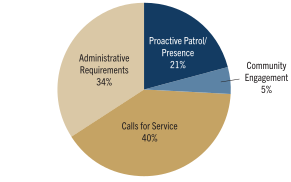
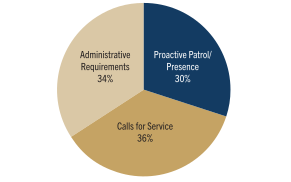
GENERAL DUTIES DETACHMENT TARGET

Chart - GENERAL DUTIES DETACHMENT TARGET

TRAFFIC ONLY DETACHMENT TARGET

Chart - TRAFFIC ONLY DETACHMENT TARGET

Over the past three years, constable activity has demonstrated favourable progress toward these provincial targets.

GENERAL DUTIES ACTIVITY ACTUALS

Activity Grouping 2023 2024 2025
Calls for Service 48.2% 46.7% 45.5%
Administrative Requirements 34.4% 34.7% 34.8%
Proactive Patrol/Presence 14.5% 15.6% 16.5%
Community Engagement 2.9% 3.0% 3.2%

TRAFFIC ONLY ACTIVITY ACTUALS

Activity Grouping 2023 2024 2025
Calls for Service 39.6% 40.2% 39.8%
Administrative Requirements 40.2% 40.2% 39.0%
Proactive Patrol/Presence 20.2% 19.6% 21.2%

Fiscal Responsibility

To learn more about the OPP budget, municipal policing cost recovery, and the Value for Money audit, click Learn More.

Learn More
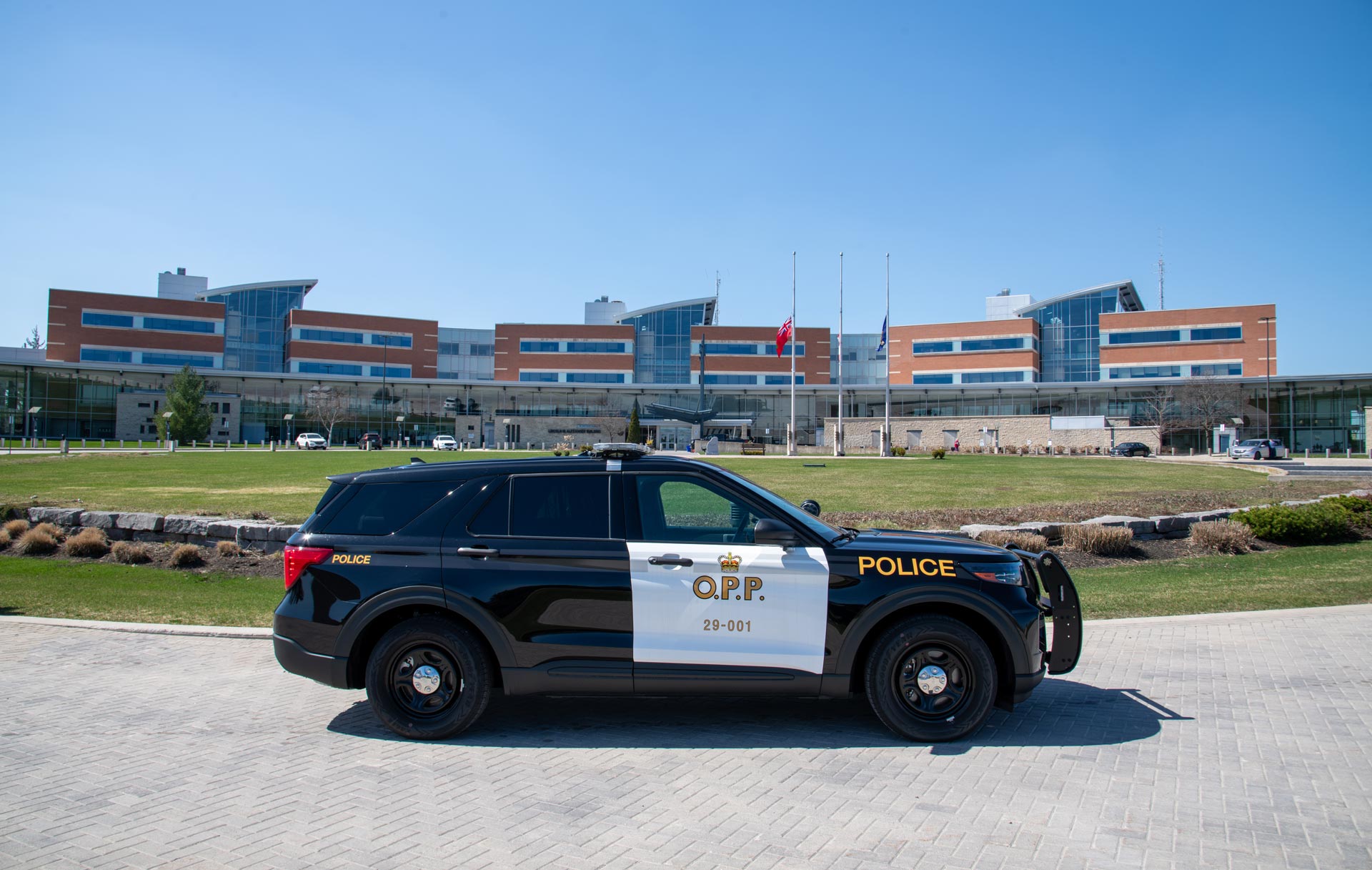
OPP SUV at General Headquarters